

Posted At: Jul 21, 2026 - 573 Views
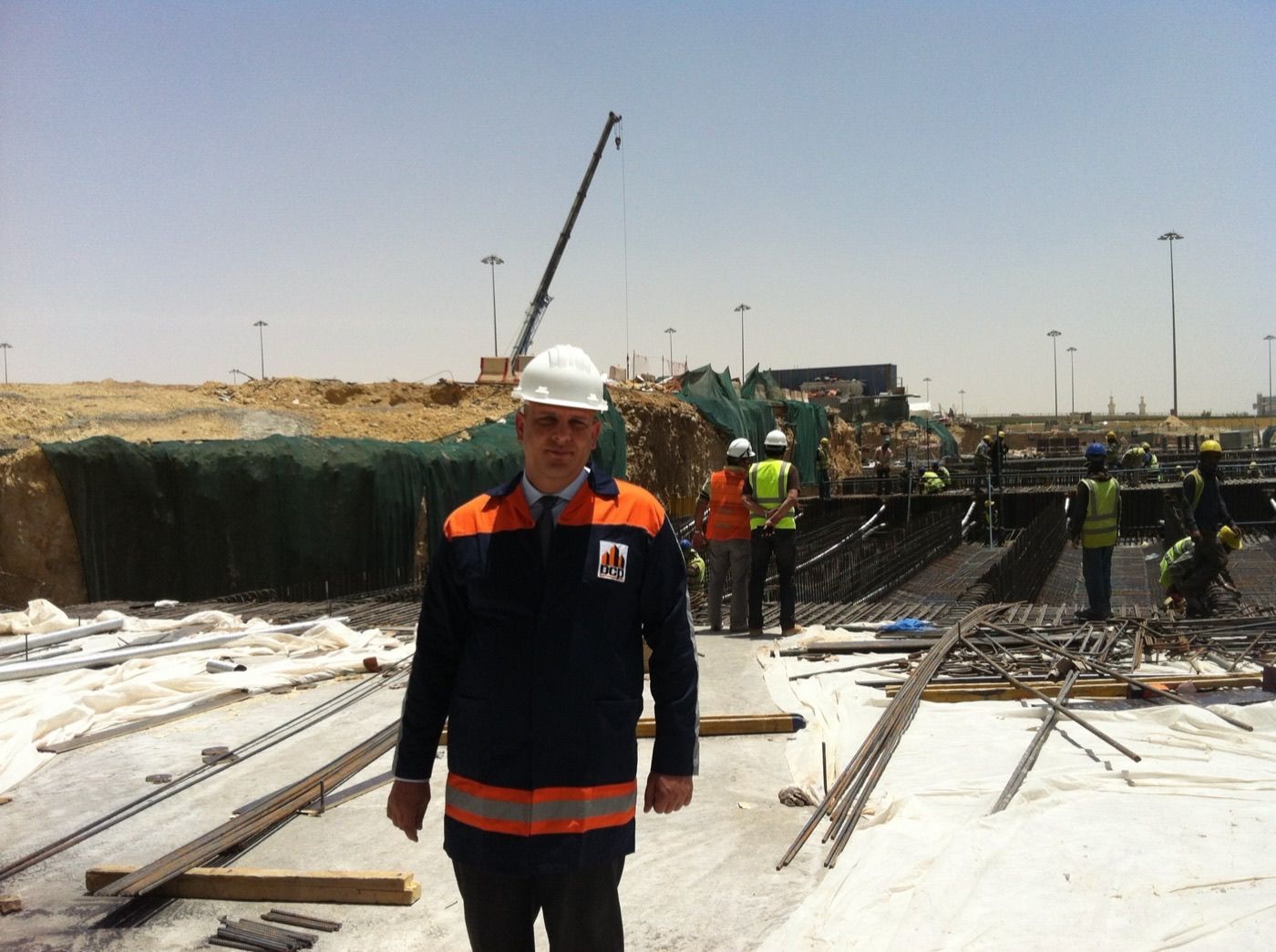
Here I am on site at KAFD in 2012, wearing DCP colors. Behind me are raft reinforcement, cranes, and shuttering. Back then, the district was mostly just an idea on paper.
In 2012, I was the general manager of DCP Saudi, and the King Abdullah Financial District was one of our toughest projects. We provided construction chemicals to many contractors across the site, including concrete admixtures for Riyadh's hot summers and waterproofing for future basements under towers and a metro station. My role meant I was often on site, working between specifiers, designers, and site teams to solve problems. One afternoon, while standing among the excavations and steel, wearing a hard hat over my suit and tie, I asked a colleague to take a photo. It was a regular moment on a remarkable project. Back then, the district mostly existed in drawings, schedules, calculations, and the shared imagination of everyone building it.
Fourteen years later, I came back and could hardly recognize it.
The construction site had turned into a real district, with towers, landscaped plazas, walkways, restaurants, offices, homes, and a metro station that people photograph even if they are not catching a train. Walking through it reminded me of that old photo and filled me with pride, not just in the finished buildings, but in the thousands of people whose work made it all possible.
What rose from those foundations
KAFD started under King Abdullah and was developed by the Public Pension Agency through Rayadah Investment Company. Work on the site began in 2006, and the master plan was approved in 2007. To be honest, the project had a tough middle period: for years, progress was slow, and by the mid-2010s, much of it was built but mostly empty. In 2017, the Public Investment Fund took over and set up a new company to manage and develop the district, giving it a new purpose as a business and lifestyle hub for Saudi Vision 2030. The fact that the project could stall, change hands, and still become something valuable is part of what makes the finished district so impressive.
Back then, as I delivered to contractors across the site, I saw KAFD in small pieces, one pour, one package, one deadline at a time. Now, walking through it, I could finally see the whole picture: 95 buildings designed by over 25 international architectural firms, each tower unique, but all coming together as one place. The master plan we once saw as sections and specs had turned into a city where you could go out for dinner.
The invisible work
Almost everything my company added to KAFD is hidden now. That's just how construction chemicals work: admixtures are inside the concrete, waterproofing is buried underground, and repair mortars are behind the facades. Nobody takes pictures of these things. On my return, I realized this is true for almost all the work that goes into building a district like this. Behind every finished building are thousands of drawings, inspections, approvals, calculations, safety checks, meetings, and technical decisions. There are workers, engineers, supervisors, consultants, contractors, suppliers, and project managers all solving problems that most visitors will never know about. Projects this big are never the work of just one person, company, or discipline.
When I look at my 2012 photo, I remember the heat, the unfinished concrete, the steel bars, and the constant activity of people and machines. Seeing KAFD today, I see what all those individual efforts have achieved.
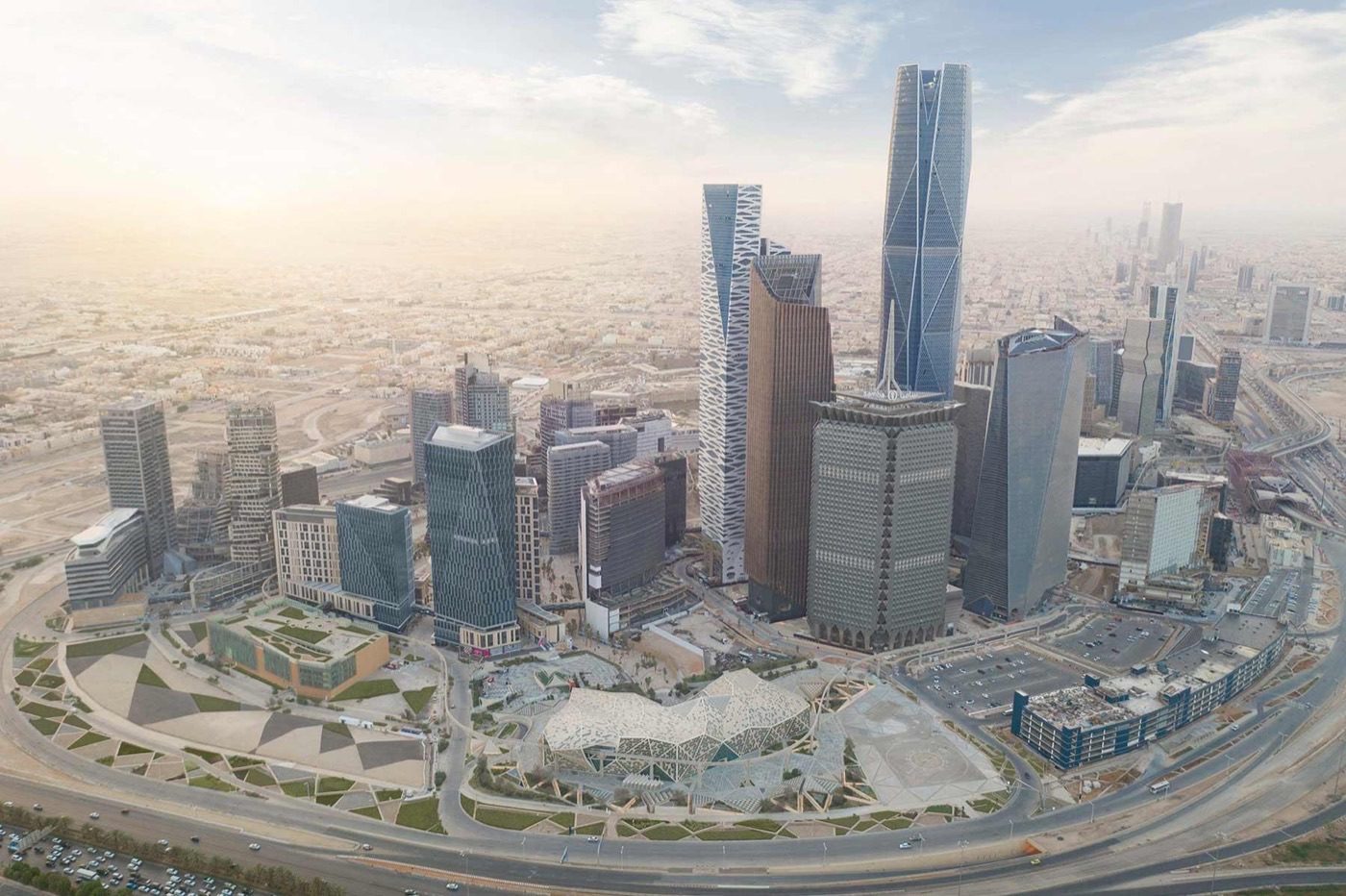
The same place, fourteen years later.
The station that developed alongside the district
The best sign of how much things have changed is the KAFD Metro Station by Zaha Hadid Architects, designed and built between 2012 and 2024, almost exactly the years I was away. In 2012, that spot was just excavation and storage areas. Now, it's the interchange for the Blue, Yellow, and Purple lines of the Riyadh Metro, with six platforms on four public levels. The architects studied how people, trains, and vehicles would move through the station and used those patterns to shape the building, which features opposing sine waves running from the inside out through its flowing shell. The facade's perforations help reduce heat from the sun, and its curves echo the patterns left by desert winds in the sand. The station opened with the first phase of the Riyadh Metro in December 2024 and has LEED Gold certification, with cooling that adjusts to the number of passengers throughout the day.
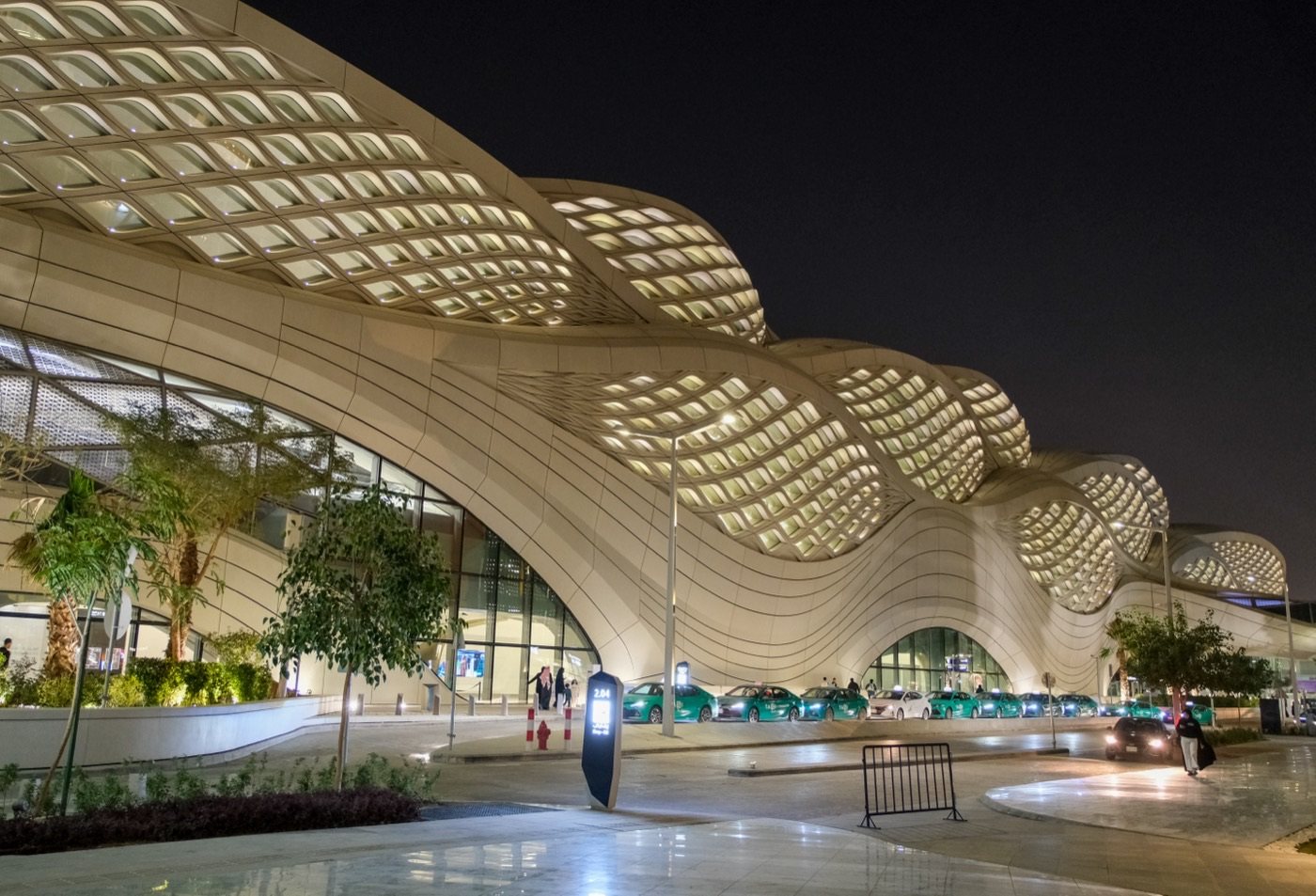
The KAFD Metro Station by Zaha Hadid Architects. Photo: Francisco Anzola, CC BY 2.0.
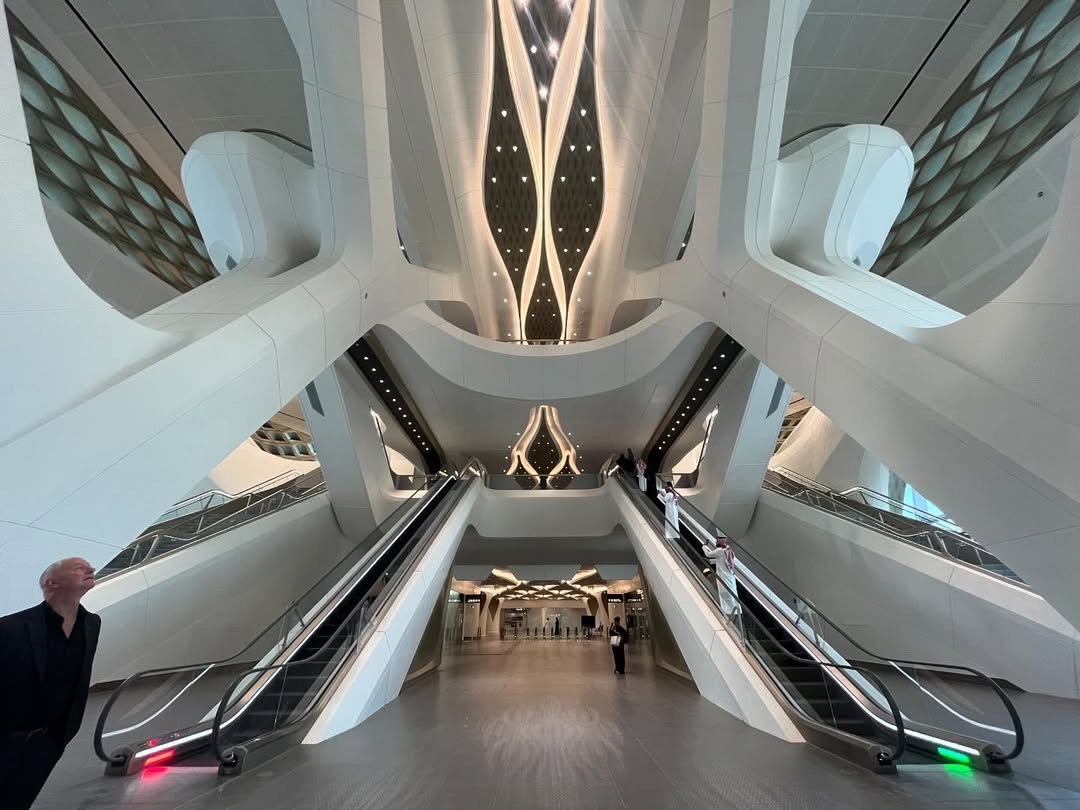
Inside the station, opposing sine waves run from the interior out through the flowing shell. Photo: Ali Lajami, CC BY 2.0.
The district itself is also certified. KAFD is called the world's largest LEED for Neighborhood Development Stage 2 Platinum project by its developer and the US Green Building Council, with over 500,000 square meters of landscaped space. Much of this greenery is in the Wadi, a public corridor 5.5 meters below street level where the air feels much cooler. In Riyadh, making an outdoor space walkable in August is an engineering challenge before it's a design one.
Cities are built twice
Visiting again reminded me that working on a project like this is never just another job. Standing there, I realized I could still see the district through a supplier's eyes, knowing which hidden materials are inside the visible walls. The 2012 photo doesn't show any of that, it just shows dust, steel, and a man in a hard hat. I keep it because it proves something the finished skyline hides: cities are built twice, first in plans and imagination, and then through the work of the people who make them real. I'm proud that a small part of what holds KAFD together is ours.
Nabil Kilany was general manager of DCP Saudi in 2012, supplying construction chemicals to contractors at KAFD. He is now Chief Business Development Officer of Buildstation (MHG Trading), listed on Tadawul.